




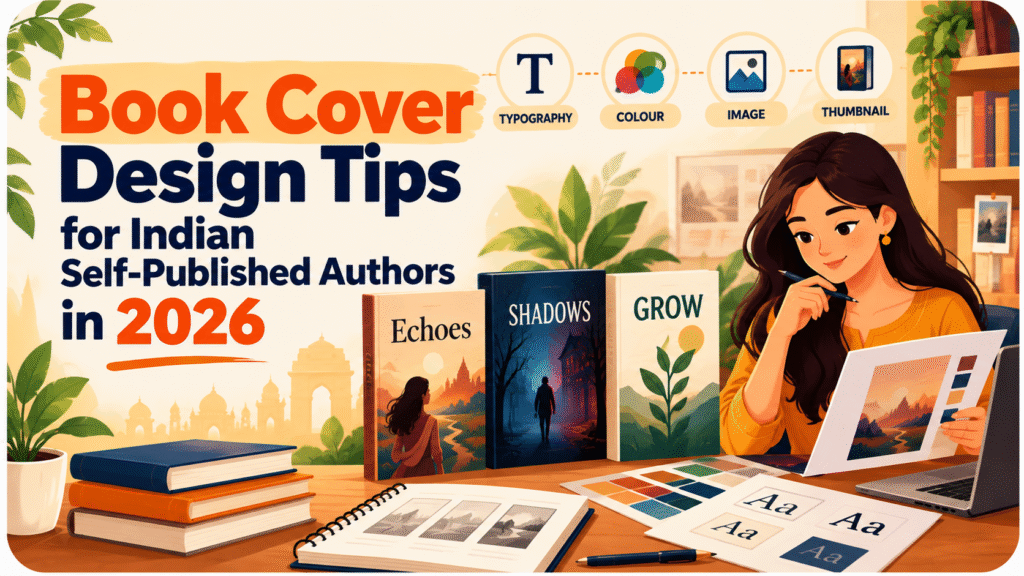
Book cover design India is an important part of self-publishing because readers often notice the cover before they read the description. A strong cover can quickly communicate the book’s genre, mood and level of professionalism.
However, a good cover is not simply a beautiful image with a title placed on top. It also needs clear typography, suitable colours, strong visual balance and a layout that works both online and in print.
Therefore, self-published authors should treat cover design as part of the publishing process rather than a last-minute decoration. This guide explains the main book cover design tips Indian authors should consider in 2026.
Why Book Cover Design Matters
A cover creates the first visual impression of a book. In many cases, readers see only a small thumbnail before deciding whether to look closer.
For that reason, the cover should clearly communicate what kind of book it is. A romance novel should not look like a business handbook, while a children’s book should not feel like a serious academic title.
A strong book cover should help with:
- Genre recognition
- Reader interest
- Professional presentation
- Online visibility
- Author branding
- Print quality
Most importantly, the cover should make the reader curious without confusing them about the book.
Book Cover Design India: Start With the Genre
Before choosing colours, fonts or images, first understand how books in your genre usually look.
For example, thrillers often use bold contrast and dramatic imagery. Meanwhile, literary fiction may use more restrained or symbolic visuals.
Therefore, researching comparable books can help an author understand reader expectations without copying another design.
| Genre | Common Visual Direction |
|---|---|
| Romance | Emotional imagery, warm tones, elegant type |
| Thriller / Mystery | Strong contrast, tension, bold typography |
| Business | Clean layout, strong title, simple visual concept |
| Self-Help | Clear message, simple symbols, readable text |
| Poetry | Minimal, artistic or symbolic presentation |
1. Make the Title Easy to Read
The title is usually the most important text on the cover. Therefore, it should remain readable even when the cover is shown as a small thumbnail.
Avoid overly thin fonts, complicated scripts or low contrast between the text and background.
In addition, keep the hierarchy clear. The title should usually be more prominent than the subtitle and author name.
2. Use Fonts That Match the Book
Typography changes how a book feels before the reader opens it.
For example, a traditional serif font may suit historical fiction or literary work. A modern sans serif font may work better for business or contemporary non-fiction.
However, using too many fonts can make the cover look unplanned. In most cases, one or two well-chosen typefaces are enough.
3. Choose a Strong Main Visual
A cover usually works better when it has one clear visual idea instead of many unrelated elements.
The main image, illustration or graphic should support the book’s theme. Therefore, every visual element should have a purpose.
For instance, a memoir may use a meaningful photograph, while fantasy may use an illustrated world or symbolic object.
4. Keep the Cover Simple
One of the most common self-publishing mistakes is trying to place too much information on the front cover.
Multiple images, long taglines, too many colours and several font styles can compete for attention.
Instead, create a clear visual order. The reader should know where to look first, second and third.
5. Design for Thumbnail Size
Online bookstores often show covers very small. As a result, a design that looks good on a large monitor may fail when reduced.
Therefore, always test the cover at thumbnail size.
At a small size, check whether:
- The title is still readable
- The main image is clear
- The colours remain distinct
- The overall genre is still obvious
6. Use Colour With a Clear Purpose
Colour can create emotion and attract attention. However, more colour does not always mean a better design.
A limited palette often looks more professional. In addition, strong contrast helps important text remain readable.
For example, dark navy and cream can feel serious and elegant, while bright yellow and orange may feel energetic and youthful.
7. Do Not Forget the Back Cover
For printed books, the front cover is only one part of the full cover file.
The back cover may include the book description, author information, barcode area or other publication details.
Therefore, it should follow the same visual style as the front instead of looking like a separate design.
8. Design the Spine Carefully
A paperback or hardcover spine becomes important when the book is placed on a shelf.
Usually, the spine includes the title, author name and sometimes the publisher mark.
However, spine width depends on factors such as page count, paper type and binding. Therefore, the final cover should not be completed until the interior page count is confirmed.
9. Prepare the Correct Print-Ready File
A good-looking design can still print badly if the technical file is incorrect.
Before printing, check:
- Final trim size
- Bleed area
- Spine width
- Image resolution
- Colour settings
- Safe margins
- Barcode position
If you use Amazon KDP, its official
Cover Calculator and Templates
can help generate the correct print-cover dimensions for supported KDP editions.
10. Use High-Quality Images
Low-resolution images may look acceptable on a phone but appear blurred in print.
Therefore, authors should use high-quality source images and confirm that they have the right to use them commercially.
Avoid downloading random images from search engines. Instead, use original artwork, licensed images or properly sourced design assets.
11. Make Sure the Cover Matches the Interior
The cover creates an expectation. Therefore, the interior should support the same level of quality.
A premium cover followed by poorly formatted pages can create a disappointing reading experience.
For this reason, cover design, typesetting and editing should be treated as connected parts of the same book.
12. Avoid Copying Bestselling Covers
Studying successful books is useful. However, directly copying their typography, artwork or layout is not a good strategy.
Instead, study the visual patterns of the genre. Then create a design that fits those expectations while still feeling original.
This approach helps the book feel familiar to the right audience without becoming a copy of another title.
Common Book Cover Design Mistakes
- Using too many fonts
- Making the title too small
- Choosing weak text contrast
- Adding too many visual elements
- Using low-resolution images
- Ignoring thumbnail readability
- Finalising the spine too early
- Using images without proper rights
- Ignoring print bleed and safe areas
Most importantly, the cover should serve the book rather than simply show how many design elements can fit on one page.
DIY Cover Design vs Professional Design
| Option | Useful When | Main Risk |
|---|---|---|
| DIY Cover | Author has strong design skills | Can look amateur if typography or print setup is weak |
| Professional Designer | Author wants specialised design support | Needs a clear brief and suitable designer |
There is nothing wrong with designing your own cover if you understand typography, layout and print requirements. However, using a template alone does not automatically create a professional result.
Book Cover Design Checklist
- Genre is visually clear
- Title is readable at thumbnail size
- Author name is clear
- Fonts work well together
- Main image is high quality
- Colours have good contrast
- Front, spine and back feel consistent
- Spine width is based on final page count
- Bleed and safe areas are correct
- Final print file has been checked
More Publishing Guides for Authors
Before finalising the cover, read our
Book pricing India guide
to understand how format and production cost can affect the final MRP.
You can also review our
Book editing guide for self-published authors
before preparing the final publication files.
For Amazon publishing, our
Amazon KDP India 2026 guide
covers ISBNs, file preparation and other publishing basics.
Frequently Asked Questions About Book Cover Design
What Makes a Good Book Cover?
A good cover is clear, genre-appropriate and easy to understand. It should also remain readable at thumbnail size and look professional in print.
How Many Fonts Should a Book Cover Use?
There is no strict rule, but one or two well-matched typefaces are often enough. Too many font styles can make a cover look inconsistent.
Should the Cover Be Designed Before Typesetting?
The front-cover concept can be developed earlier. However, the final print cover should normally wait until the interior page count is confirmed because the spine width depends on the finished book.
Can I Design My Own Book Cover?
Yes, especially if you understand design and print requirements. However, authors without design experience should carefully test typography, image quality and technical setup before publishing.
Why Does Thumbnail Design Matter?
Online readers often see a very small version of the cover first. Therefore, the title, image and overall genre should still be clear when the cover is reduced.
How Tarang Prakashan Looks at Book Cover Design
At Tarang Prakashan, a book cover is treated as part of the complete presentation of the book.
The design should match the genre, remain readable and work correctly for the chosen format. Therefore, visual design and technical print preparation need to work together.
At the same time, the cover should give each book its own identity rather than making every title look the same.
Book Cover Design India: Final Thoughts
Book cover design India works best when authors combine clear visual thinking with proper technical preparation.
First, understand the book’s genre and target reader. Next, choose typography, images and colours that support that message.
After that, test the cover at thumbnail size and prepare the final front, spine and back file according to the chosen print specifications.
Ultimately, a professional book cover should not simply look attractive. It should help the right reader understand what kind of book they are looking at before they even open it.